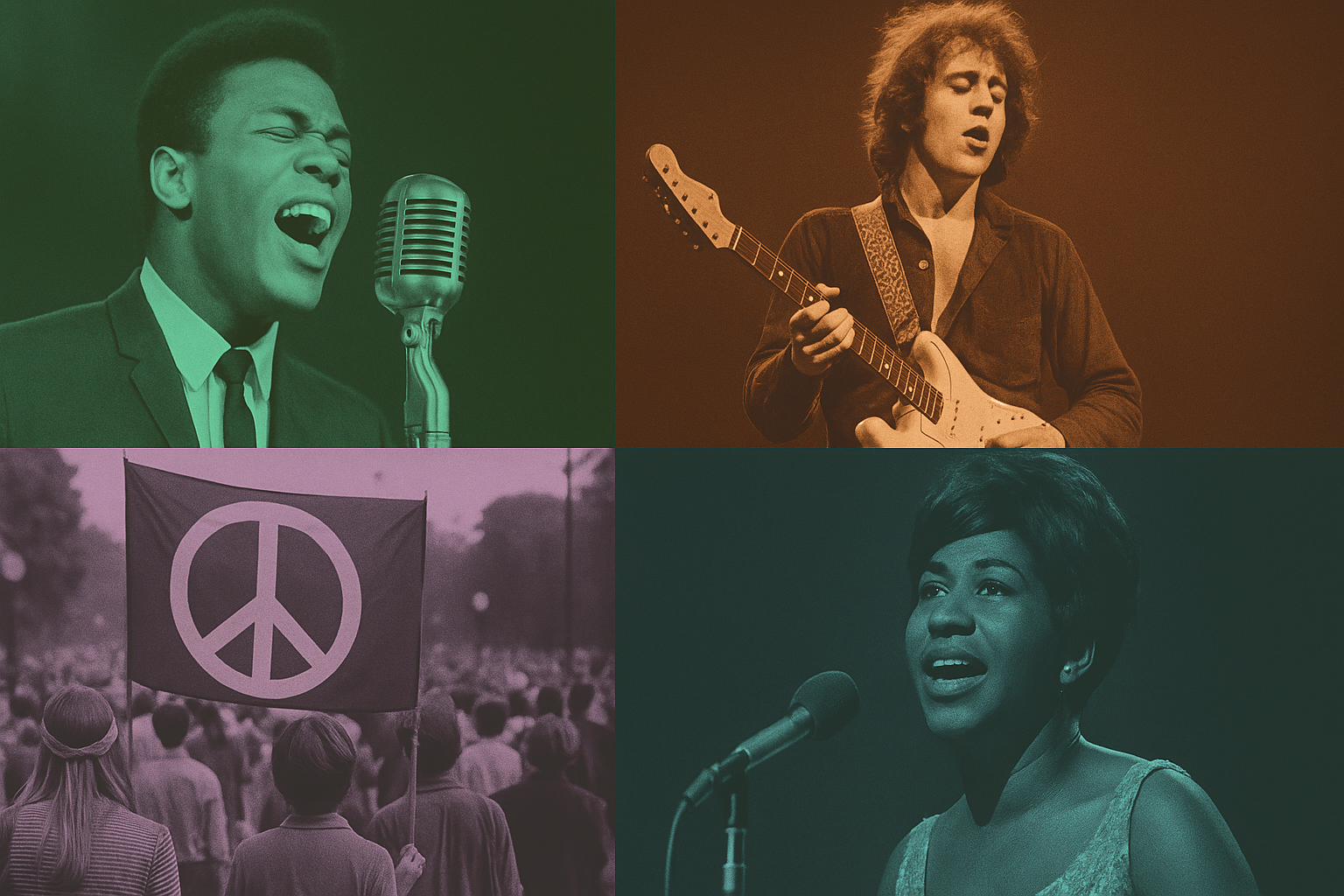
When the Beatles landed at JFK Airport in February 1964, they didn’t just arrive in America—they reshaped it. And when nearly half a million people gathered in a muddy New York field in August 1969 for Woodstock, it wasn’t just a concert—it was a culmination.
Between these two cultural earthquakes, music did more than entertain. It provoked, soothed, inspired, divided, and defined a generation.
This post isn’t meant to be definitive. Instead, it’s a starting point—ten songs from different genres and years that capture some of the tension, triumph, and transformation of those five pivotal years. You may have your own list (and I hope you do!), but let these ten spark the conversation:
🕊️ 1. “A Change Is Gonna Come” – Sam Cooke (1964)
With its sweeping orchestration and trembling vulnerability, Sam Cooke’s anthem became the soulful heartbeat of the civil rights movement. It wasn’t just a song—it was a promise.
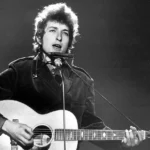
🎤 2. “Like a Rolling Stone” – Bob Dylan (1965)
Dylan shattered the radio rulebook with a 6-minute epic that sounded like poetry put through an amplifier. It opened doors for musicians to say something in their songs—and not worry if it rhymed.
🎷 3. “In the Midnight Hour” – Wilson Pickett (1965)
Southern soul in its purest form. A driving rhythm, a deep groove, and a voice that didn’t ask—you felt it whether you wanted to or not.
🕺 4. “I Got You (I Feel Good)” – James Brown (1965)
You couldn’t sit still when this came on. James Brown didn’t just perform—he commanded, laying the groundwork for funk and influencing decades to come.
🌞 5. “Good Vibrations” – The Beach Boys (1966)
California sunshine in sonic form—except this wasn’t simple surf music. Brian Wilson pushed the boundaries of what pop music could sound like in a studio, and made experimentation feel joyful.
🖤 6. “Paint It Black” – The Rolling Stones (1966)
A rock song that flirted with Eastern music, emotional darkness, and rebellion. In many ways, it marked the loss of innocence in mainstream music.
✊ 7. “Respect” – Aretha Franklin (1967)
It’s one thing to demand respect—it’s another to make the world sing it back. Aretha’s power turned Otis Redding’s tune into a feminist and civil rights battle cry.
☮️ 8. “For What It’s Worth” – Buffalo Springfield (1967)
Originally about a curfew in LA, it became an anthem of dissent. With haunting guitar and cryptic lyrics, it captured a national mood: weary, watchful, wary.
⚡ 9. “Purple Haze” – Jimi Hendrix (1967)
Electric, untamed, and impossibly cool—Hendrix didn’t just play the guitar; he sculpted entire new soundscapes. Rock was never the same after this.
💔 10. “Piece of My Heart” – Big Brother & the Holding Company feat. Janis Joplin (1968)
Janis didn’t sing this song—she poured it out. It was pain, power, and passion wrapped in a raspy cry that still echoes today.
🔥 This Is Just the Beginning
Ten songs. One era. A million memories.
This list isn’t meant to be the list. It’s meant to be a list—a doorway to your memories, your soundtrack, your truth. Maybe you would add The Temptations. Or Jefferson Airplane. Maybe your version of 1964–1969 includes Motown, country, garage rock, or jazz. Let’s hear it.
🎧 What songs would you include between the Beatles and Woodstock?
Leave a comment, share a memory, or make your own list. The discussion doesn’t end here—it starts here.
Let’s celebrate the music that didn’t just play in the background of our lives…
It shaped them.
Author Profile