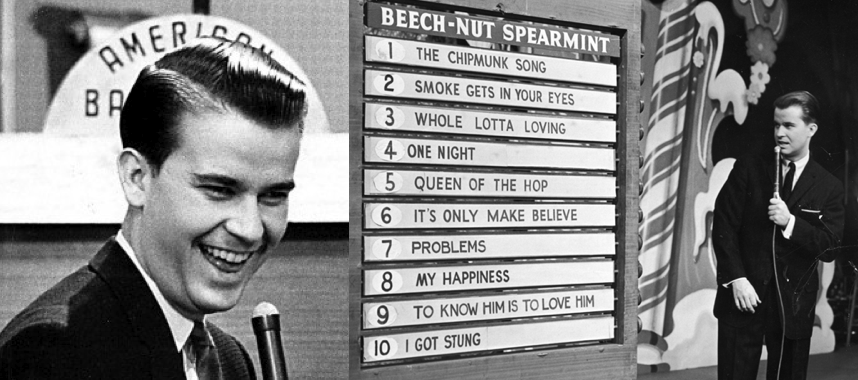
In the days before MTV and YouTube, if you wanted to see your favorite artists perform, you turned on the television—and no show loomed larger than American Bandstand.
Hosted by the eternally youthful Dick Clark, American Bandstand aired nationally from 1957 to 1989, becoming one of the most influential platforms for popular music in American history. But it was more than just a music show—it was a weekly ritual, a mirror held up to American teens that reflected who they were and who they wanted to be.
Every weekday afternoon—and later, once a week on Saturdays—millions of teenagers tuned in to watch their peers dance to the latest hits. The setup was simple: a room full of clean-cut teens dancing in pairs, intercut with short live performances and interviews with rising stars. But the impact was profound.
If the radio let us hear the music, Bandstand let us see it.
Suddenly, artists weren’t just voices—they were faces, movements, attitudes. Viewers saw Elvis swing his hips, Frankie Avalon flash his smile, or Smokey Robinson croon with effortless cool. From Chubby Checker teaching the Twist to Madonna’s earliest TV appearances, Bandstand gave pop culture a stage—and gave its audience a say in what was hot.
For many, this was also the first time seeing Black artists perform in their living rooms. While the show initially mirrored America’s segregated media, Dick Clark gradually integrated the show, bringing on legends like James Brown, The Supremes, Little Richard, and Smokey Robinson & the Miracles, helping bridge musical and racial divides—one afternoon performance at a time.
But perhaps the most lasting legacy of American Bandstand was how it created a national youth identity.
It gave birth to the concept of the teenager as tastemaker. Fashion trends spread through the screen. Haircuts, dance moves, slang, and records all traveled from the studio in Philadelphia (and later Los Angeles) to living rooms across America. If Bandstand teens liked it, the rest of us did too.
Of course, Bandstand wasn’t alone. Shows like The Ed Sullivan Show, Shindig!, Hullabaloo, and Soul Train all played major roles in bringing music into American homes. But Bandstand was daily, intimate, and driven by the energy of the crowd on the floor—kids not much older than you or me.
For me—and for so many others—American Bandstand was where music started to feel real. It gave rhythm to our afternoons and helped shape the beat of our becoming.
As Dick Clark famously said at the end of every broadcast:
“For now, Dick Clark…so long.”
But his influence never really said goodbye.
Author Profile