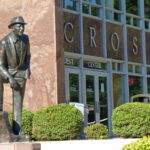
On the morning of November 22, 1963, I was in music class with my fifth-grade classmates, trying to master the flutophone. Our lesson was held in the high school building of Rosalia, Kansas—a small town where my father also happened to be a teacher.
Suddenly, there was a knock at the door. It was my dad. He stepped in, whispered something to Mr. Thomas, our music teacher, and the class was immediately dismissed. We were told to go home. But first, we had to walk through the school gymnasium.
I was only ten years old. And I remember this part with a certain shame: as we walked through the gym, not fully grasping the gravity of the moment, some of us cheered. We didn’t understand that the President of the United States—John F. Kennedy—had just been assassinated. We only knew school was canceled. The weight of history hadn’t settled on our shoulders yet.
That day didn’t change my personal soundtrack. The music that would shape my life was already quietly in motion. The Beatles would still arrive, the British Invasion would still sweep across America, and protest music would still rise in response to the Vietnam War. But something in America’s soundtrack shifted that day. A certain kind of innocence faded.
At age ten, I was still discovering music. But it had already made its way into my life in quiet, foundational ways.
Sunday mornings meant hymns sung at the Yates Center Methodist Church—a church my grandmother had attended, and practically ran, for over 25 years. The Methodist hymnal, along with Mitch Miller’s Sing Along with Mitch Christmas album, defined the soundtrack of my early years. Worship music and holiday classics played a central role in our family gatherings and in my earliest musical memories.
From ages three to six, we lived with my grandmother, and right there in the front room stood an upright piano. That piano would follow us to our new home in Rosalia and remain a constant presence in our house until I was seventeen. I tried learning to play once—but that’s a story for another time.
My grandmother, the heart of our church, was also the choir director. Naturally, my siblings and I were drafted into the children’s choir, where we learned to harmonize and to sing from the soul, even if we didn’t yet know what that meant.
Music was also in my blood. My father, born just two weeks before the Great Depression, had been raised almost entirely by my grandmother. His father was often absent during those lean years. Dad had once dreamed of a life in music, studied it for a time, and even taught piano lessons. But life led him to teach English instead.
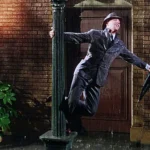
Still, he never gave up on sharing the magic of music and storytelling with us. Around 1961 or so, he borrowed a color television from a fellow teacher just so his kids could watch The Wizard of Oz the way it was meant to be seen. We watched in awe as the screen transformed from black and white to the vibrant colors of Oz. And of course, we sang along: “Follow the Yellow Brick Road,” “We’re Off to See the Wizard,” and all the whimsical songs of the Munchkins.
By the time The Beatles first appeared on The Ed Sullivan Show, I had already built a quiet but meaningful relationship with music through Sunday hymns, Christmas sing-alongs, my grandmother’s choir, and that magical night watching The Wizard of Oz in color.
This is where my soundtrack truly began.
Author Profile